
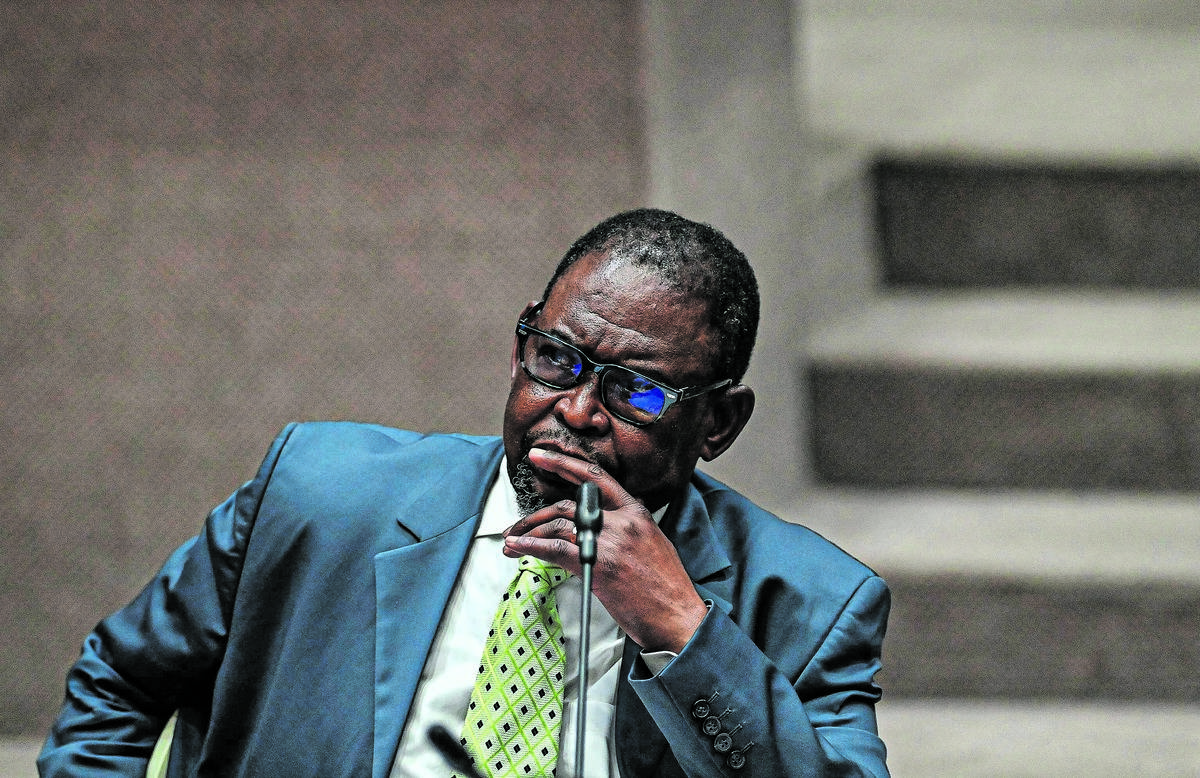
The Minister of Finance, Enoch Godongwana, will deliver the 2025 Budget Speech in the National Assembly on Wednesday 19 February. The finance minister uses his Budget Speech (which is a Money Bill for purposes of the Constitution), to indicate the allocation of financial resources to the national government’s priorities and how this spending will be funded through individual and corporate taxes and state debt.
The National Assembly will then vote on the Money Bill. In terms of the Constitution, any Money Bill can be passed in the National Assembly by a simple majority (i.e. with support from more than 200 out of 400 MPs).
Once passed in the National Assembly, it is then voted on by the National Council of Provinces (NCOP) where the bill will also pass on a simple majority. The NCOP is constitutionally mandated to ensure that provincial interests are taken into account in the national sphere of government. The NCOP consists of 90 provincial delegates, i.e. 10 delegates for each of the nine provinces.
Following the elections in May 2024, 375 of the 400 seats in the National Assembly are held by the top 7 parties as follows:
- ANC: 159 seats
- DA: 87 seats
- MKP: 58 seats
- EFF: 39 seats
- IFP: 17 seats
- PA: 9 seats
- VF Plus: 6 seats.
The GNU parties, being the ANC, DA, IFP, PA, VF Plus, UDM, Good Party, Pan Africanist Congress of Azania, Al Jama-ah and Rise Mzansi, together hold 287 seats.
This is therefore the first Budget since 1994 that cannot be passed by the ANC alone. In these unchartered waters, it will be interesting to see where all of the parties represented in the National Assembly land on some of the more pressing fiscal concerns. With government debt at R5.26 trillion or 74.1% of GDP according to the 2024 Medium-Term Budget Policy Statement, the civil service constituting one of the largest and most expensive bureaucracies in the world, a youth unemployment rate of 45,5%, collapsing municipalities, cities and towns, concerns about inflation, the cost of living crisis, calls for further financial support for SOC’s like Eskom, Transnet and, wait for it, the Post Office, tariffs, geopolitical tensions and the like, this may prove to be a challenge. And that’s even before we start talking NHI…